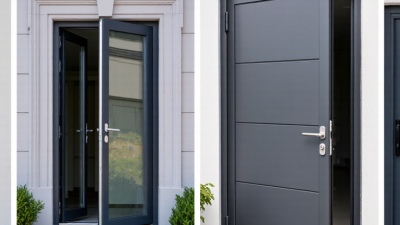
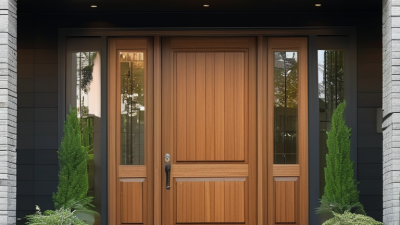
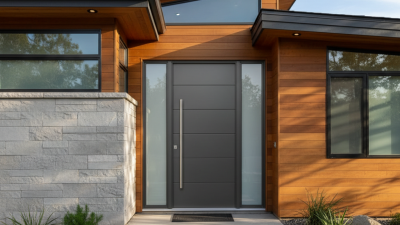
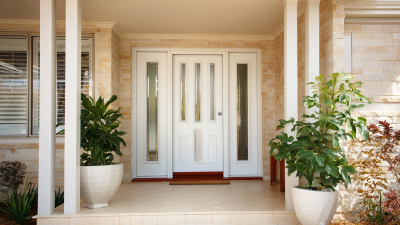
How to Choose Aluminium Front Doors for Global Projects?
Choosing aluminium front doors for global projects requires more than comparing finishes, prices, and catalogue photographs. A door that performs well in London may struggle in Dubai, Singapore, or coastal Chile. Climate, wind exposure, salt air, ultraviolet radiation, security expectations, and installation quality all influence the final result. Small details matter. Very much.
Architect Juhani Pallasmaa wrote, “The door handle is the handshake of the building.” His observation captures the balance between appearance and daily performance. The entrance should feel solid, operate smoothly, and support the building’s architectural identity. Yet visual appeal cannot hide weak drainage, poor thermal breaks, or unsuitable hardware.
This guide examines how to assess aluminium front doors for international applications. It considers profile design, thermal performance, glazing, weather seals, corrosion protection, security, accessibility, and regional compliance requirements. Project teams should request verified test data rather than relying on broad claims. They should also confirm whether replacement parts and trained installers are available locally. That point is often overlooked.
There is no universally perfect door system. A slim frame may improve daylight but reduce design flexibility for heavy glazing. A highly insulated profile may increase cost and complicate fabrication. These trade-offs deserve honest evaluation. The strongest specification usually comes from matching the door to its climate, building use, supply chain, and maintenance capacity. Not from selecting the most expensive option.
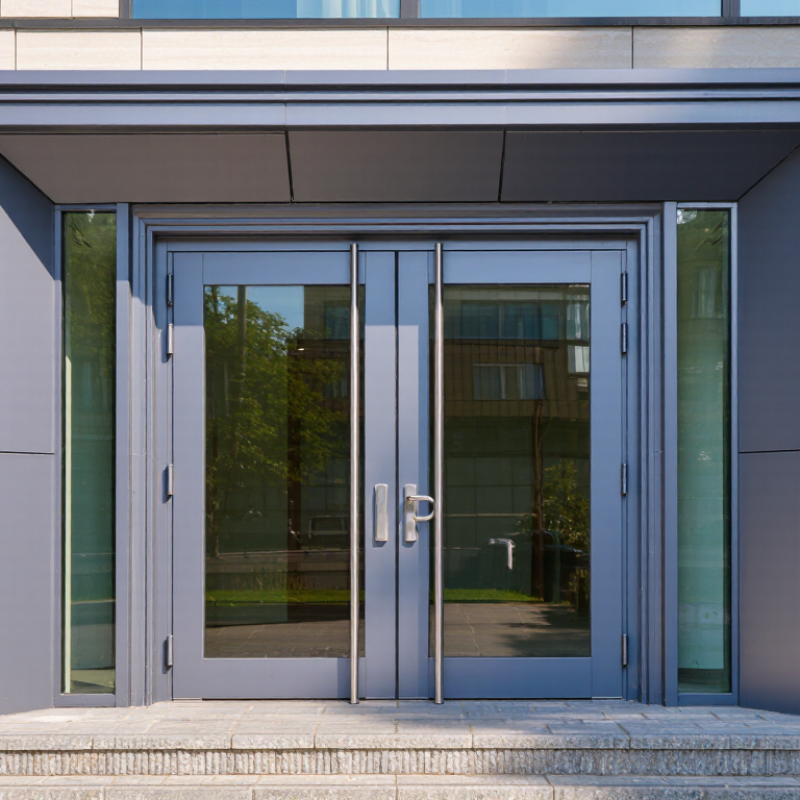
Define Climate, Wind and Code Loads Using EN 12210 and ASTM E330
Choosing aluminium front doors for global projects starts with defining real site loads, not selecting a profile from a catalogue. Record wind speed, building height, exposure, opening size, and surrounding terrain. Coastal sites also need attention to salt, rain, and frequent pressure changes. EN 12210 classifies resistance to wind load through pressure testing and deflection requirements. ASTM E330 evaluates structural performance under uniform static air pressure. These standards support comparison, but they are not interchangeable code approvals.
Specify the complete door assembly. Include the frame, leaf, hinges, locks, glass, threshold, anchors, and surrounding wall. A strong door can still fail if anchors are too closely spaced or the substrate is weak. Ask for project-specific test evidence from a competent laboratory. Check positive and negative pressure, permanent deformation, and operating performance after testing. In practice, I have seen calculations focus on the panel while ignoring the threshold connection. That mistake is easy to repeat.
Tips: Convert the local design wind pressure into a clear test pressure before ordering. Confirm whether the project authority requires EN 12210, ASTM E330, or another national code. Review climate data with the structural engineer. A neat spreadsheet can still miss gusts, corner zones, or thermal movement. Leave room for review; early assumptions are often incomplete.
Set Thermal Breaks and U-Values Under ISO 10077-1 Requirements
How to Choose Aluminium Front Doors for Global Projects?
Set Thermal Breaks and U-Values Under ISO 10077-1 Requirements
For global projects, aluminium front doors should be evaluated through thermal performance, not appearance alone. ISO 10077-1 provides a calculation method for determining thermal transmittance. It does not prescribe one universal U-value for every climate. Local energy codes and project specifications still control the target.
Thermal breaks interrupt heat flow through the aluminium frame. Select a suitable polyamide width after reviewing climate, frame depth, hardware, and structural loads. A wider break may improve performance, but it can affect fabrication and cost. Small gaps matter. The threshold needs equal attention. Poorly insulated thresholds can create cold surfaces and condensation near the floor.
Calculate the complete door assembly, including the frame, glazing, panels, threshold, and edge zones. Do not rely only on the glass Ug-value. The frame Uf-value and linear thermal bridges can change the final result significantly. Use verified material data and consistent boundary conditions under ISO 10077-1. On complex entrances, a specialist should review two-dimensional heat-flow details before production. In project reviews, a drawing may look excellent while the corner remains thermally weak. That is an uncomfortable lesson. Installation also deserves testing, because compressed seals, uneven substrates, and metal fixings can reduce real performance. A slightly conservative design is often safer than a perfect calculation with uncertain site workmanship.
How to Choose Aluminium Front Doors for Global Projects?
Thermal Break Width and Door U-Value Under ISO 10077-1
The chart shows a representative engineering comparison for aluminium front-door assemblies.
Increasing the thermal-break width generally reduces the calculated thermal transmittance,
expressed as U-value in W/m²K. ISO 10077-1 provides calculation methods for windows and doors;
it does not prescribe one universal U-value limit. Final results should be verified using the
project’s frame geometry, glazing or panel build-up, junction details, climate requirements,
and applicable local regulations.
Verify Air, Water and Structural Performance with ASTM E283, E331 and E330
Choosing aluminium front doors for a global project demands more than finish, hardware, and thermal values. I review test reports before approving a sample. The report should identify the exact door size, frame, glass, seals, hardware, and test pressure. Small changes can alter performance. Details matter.
ASTM E283 measures air leakage through the installed door assembly under a controlled pressure difference. Technicians seal the specimen into a chamber, then measure airflow. Ask for the reported leakage rate and pressure condition, not only “passed.” Compare the result with the project specification and local code. A loose corner seal may reveal poor fabrication. It is easy to miss.
ASTM E331 evaluates resistance to water penetration during static air pressure testing. Water is sprayed across the exterior while pressure stresses joints and thresholds. Check the spray duration, pressure, specimen configuration, and recorded leakage. Site drainage, sill pans, and threshold details still matter. Laboratory success cannot rescue careless installation.
ASTM E330 examines structural performance under uniform static air pressure. It helps assess deflection, permanent deformation, and damage after loading. Use project wind pressures, door dimensions, and exposure conditions when setting acceptance criteria. A report from another configuration may offer useful evidence, but it is not automatic approval. I have seen teams rely on generic data and regret it. Verify the standard edition, laboratory competence, calibration records, and installation method before procurement.
Specify Glazing, Hardware and Finishes to EN 14351-1 and ISO 7599 Standards
Choosing aluminium front doors for global projects requires more than selecting a profile and attractive colour. The specification should connect glazing, hardware, and finishes with tested performance. EN 14351-1 provides a framework for external pedestrian doorsets, including air permeability, watertightness, wind resistance, thermal transmittance, and acoustic performance. Confirm the required classification for the project location. Climate changes the decision.
Glazing should match the building’s exposure and use. In a windy coastal entrance, laminated safety glass can improve protection and reduce injury risks after breakage. Low-emissivity glass may lower heat transfer, while solar-control glass helps limit afternoon glare. Check the complete doorset, not glass alone. Frame dimensions, spacers, seals, and installation can change the declared result. Hardware needs equal attention. Specify hinge load capacity, locking points, cylinder protection, door closer strength, operating cycles, and corrosion resistance. Accessibility requirements may also affect opening force and handle height.
Finishes should be defined under ISO 7599 when anodised aluminium is selected. State the anodic layer class, colour range, surface preparation, sealing method, and expected exposure. Coastal or industrial areas deserve stricter review. Request batch samples and technical certificates. A sample can look acceptable indoors, yet appear different under direct sunlight. That mistake is common. It is also expensive to correct after installation. No specification is perfect without local verification. Coordinate the standard, test evidence, installer capability, and maintenance plan before approving production.