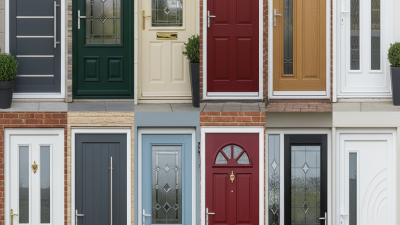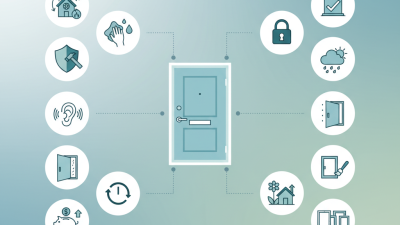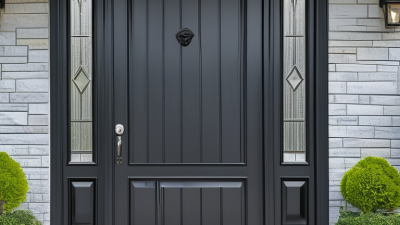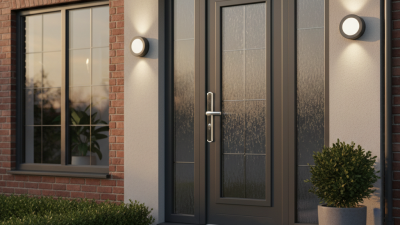


Choosing reliable upvc front doors suppliers in China requires more than comparing online prices. Global buyers must examine product quality, factory capability, export experience, and after-sales support. A polished website proves very little. The real evidence appears in samples, inspection records, hardware performance, and consistent communication.
This guide introduces China’s top 10 UPVC front doors suppliers for global buyers. It considers manufacturing experience, profile quality, thermal insulation, weather resistance, security hardware, and design flexibility. It also reviews practical details, including minimum order quantities, customization options, production lead times, packaging methods, and shipping support. Buyers may compare reinforced door panels, multi-point locks, glazed sections, and color finishes before requesting quotations. Small details matter.
No supplier is perfect.
A dependable evaluation should include factory videos, product samples, test reports, and clear commercial terms. Buyers should confirm whether stated certifications apply to the complete door or only selected components. They should also ask how suppliers manage damaged goods, replacement parts, and installation questions after delivery. These points can reveal more than a low unit price. However, supplier rankings may change as capacity, service teams, and product lines develop. This list is therefore a practical starting point, not an absolute verdict. Careful buyers should conduct independent due diligence before signing contracts. With transparent comparisons and realistic expectations, importers can identify suitable Chinese manufacturers for residential projects, apartments, and renovation programs.
China Top 10 UPVC Front Doors Suppliers for Global Buyers?
China’s UPVC front door supplier market is layered, not uniform. Large factories usually produce profiles, frames, glazing units, and finished doors. Smaller workshops focus on assembly, custom colors, or export orders. Many suppliers operate as OEM manufacturers, while trading companies coordinate design, inspection, and shipping. This structure gives buyers flexibility, but it can hide production differences.
According to Grand View Research, the global UPVC doors market is projected to grow at roughly 6% annually through 2030. China remains important because its manufacturing base supports profile extrusion, hardware sourcing, and container-scale production. The China National Bureau of Statistics also reported continued growth in completed building areas during recent years, supporting domestic demand for energy-efficient doors. Yet demand alone proves little. Supplier capability must be checked.
Factory visits reveal practical details. Ask to see profile extrusion lines, welding machines, drainage channels, and glass-sealing stations. Review test records for air leakage, water resistance, wind pressure, and thermal performance. EN 14351-1 and local building standards can guide documentation. Independent inspection is safer than catalog promises. Some suppliers quote a low unit price, then exclude packaging, reinforcement, or installation hardware. That is where budgets quietly change. A careful buyer should compare complete door sets, not attractive headline prices. Mistakes still happen, especially when drawings lack opening direction and threshold details.
| Market Position | Supplier Profile | Common Manufacturing Base | Main Product Focus | Typical Buyer | Customization Capability | Export Readiness | Documents and Checks |
|---|---|---|---|---|---|---|---|
| 01 | Large integrated door and window manufacturer | Established coastal and eastern China manufacturing zones | UPVC entrance doors, patio doors, windows, and complete fenestration systems | Importers, distributors, and construction contractors | High; sizes, glazing, panels, hardware, colors, and opening configurations | Usually experienced with export packaging, container loading, and commercial invoices | Request product drawings, material specifications, test reports, packing details, and factory audit records |
| 02 | Mid-sized UPVC door specialist | Regional industrial clusters serving domestic and overseas projects | Front doors with reinforced profiles, insulated panels, and multi-point locks | Residential developers and regional wholesalers | Medium to high; suitable for repeat models and project specifications | Often supports OEM orders and mixed-container planning | Verify profile wall thickness, steel reinforcement, weather seals, locking points, and corner welding quality |
| 03 | OEM and private-label manufacturer | Export-oriented production areas with contract manufacturing capacity | Buyer-designed UPVC entrance door ranges and retail-ready packaging | Building-material retailers and private-label importers | High; artwork, labels, packaging, hardware combinations, and technical drawings | Generally familiar with labeling, carton marking, pallets, and export documentation | Confirm intellectual-property permissions, packaging ownership, sample approval, and quality-control procedures |
| 04 | Energy-efficiency focused manufacturer | Factories supplying markets with stronger thermal-performance requirements | Insulated UPVC front doors, sealed glazing units, and low-maintenance systems | Cold-climate distributors and energy-conscious housing projects | Medium; performance depends on profile, glazing, reinforcement, and installation details | Export capable when technical data and installation guidance are well prepared | Ask for U-value calculation or test evidence, air-permeability data, water-tightness results, and installation instructions |
| 05 | Security-door and reinforced-frame specialist | Metal and UPVC component manufacturing regions | Reinforced front doors, steel-core frames, laminated glazing, and multi-point locking systems | Detached-home builders and security-focused distributors | Medium; hardware and reinforcement options are commonly configurable | Suitable for project exports after hardware and security requirements are confirmed | Check steel reinforcement layout, lock compatibility, cylinder dimensions, hinge capacity, and security test scope |
| 06 | Mass-production value supplier | High-volume industrial areas with standardized production lines | Standard white or colored UPVC doors for cost-sensitive housing | Volume importers and affordable-housing contractors | Low to medium; best performance is achieved with standard specifications | Usually optimized for container quantities and repeat orders | Compare total landed cost, minimum order quantity, defect allowance, packaging strength, and replacement policy |
| 07 | Project-engineering supplier | Manufacturers with dedicated technical teams and project-order workflows | Non-standard dimensions, coordinated door schedules, and multi-building orders | General contractors, developers, and public-sector projects | High; supports drawings, schedules, shop approvals, and phased production | Better suited to formal purchase orders and milestone-based inspections | Require approved shop drawings, door schedules, inspection plans, tolerances, and delivery sequencing |
| 08 | Decorative entrance-door supplier | Design-oriented production centers serving residential renovation markets | Panel-style doors, decorative glass, wood-effect finishes, and colored profiles | Home-improvement retailers and custom-home builders | High in appearance; technical options depend on the production line | Can support export orders when finish samples and color references are approved | Approve physical samples, color tolerances, glazing specifications, scratch protection, and cleaning instructions |
| 09 | Regional export factory | Secondary manufacturing cities connected to major domestic logistics routes | Standard and semi-custom UPVC front doors for selected overseas markets | Small and medium importers seeking flexible order quantities | Medium; flexibility varies according to available profiles and hardware | May offer competitive pricing but requires closer verification of export experience | Validate business registration, production address, export references, sample quality, and pre-shipment inspection access |
| 10 | Trading company with outsourced production | Commercial hubs that coordinate multiple specialized factories | Multi-source door packages, mixed products, and consolidated shipments | New importers and buyers requiring several building products | Potentially high, depending on the selected production partner | Can simplify sourcing, but factory identity and quality responsibility must be transparent | Confirm the actual factory, quality-control responsibility, warranty terms, inspection rights, and contract seller |
Note: The ten positions represent common supplier categories in China’s UPVC front-door market rather than a ranking of named companies. Actual performance, certifications, minimum order quantities, lead times, and export capability should be verified directly with each supplier.